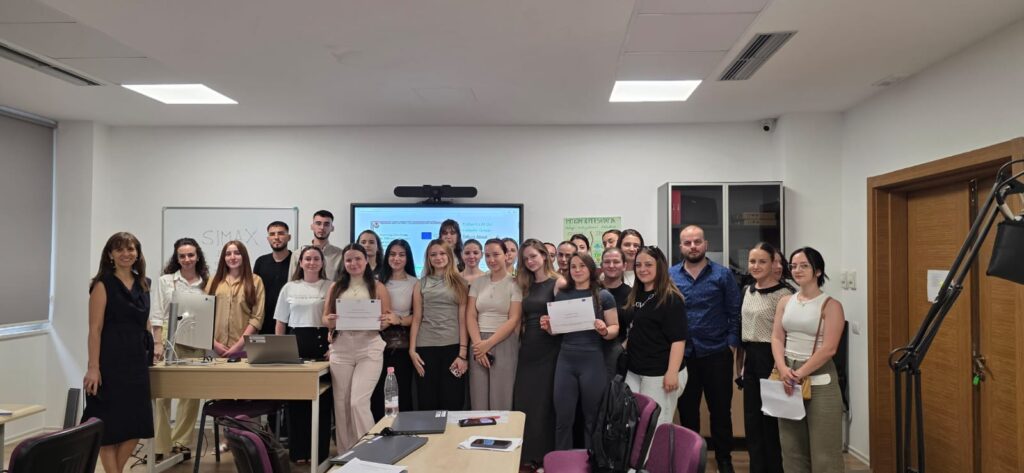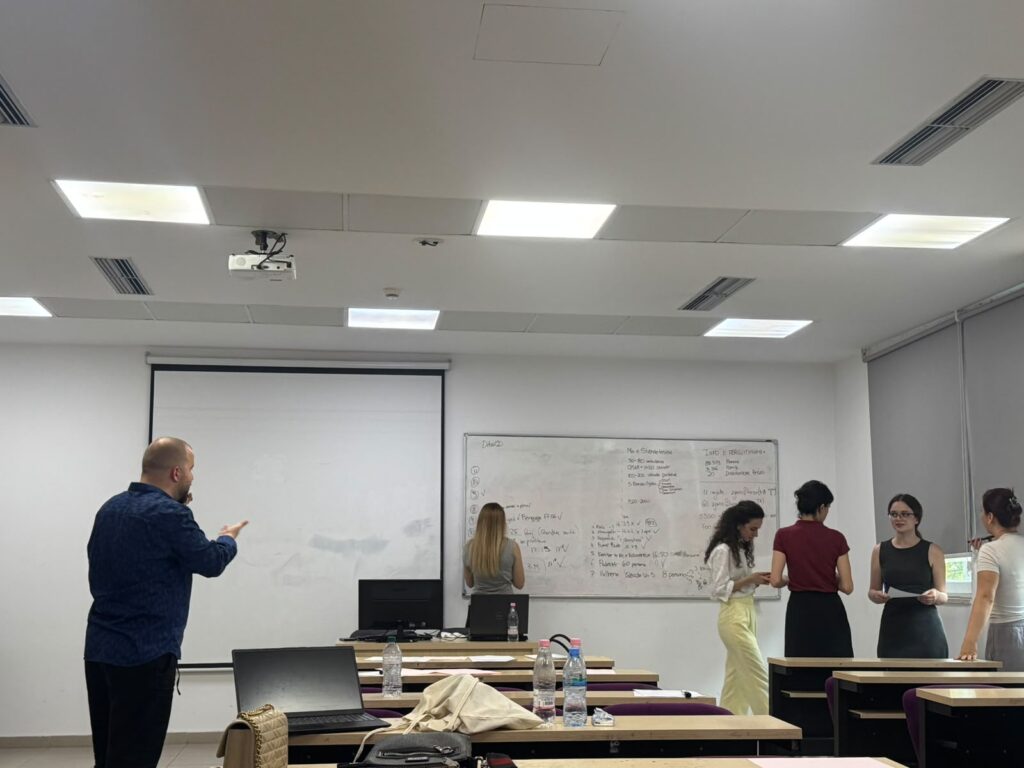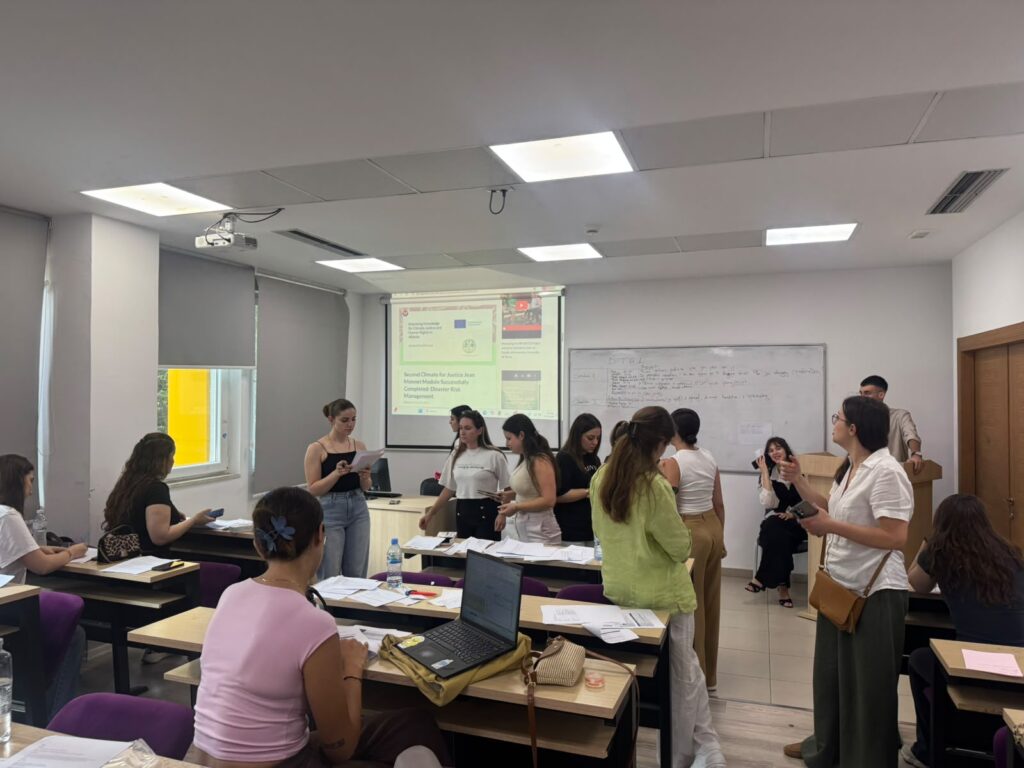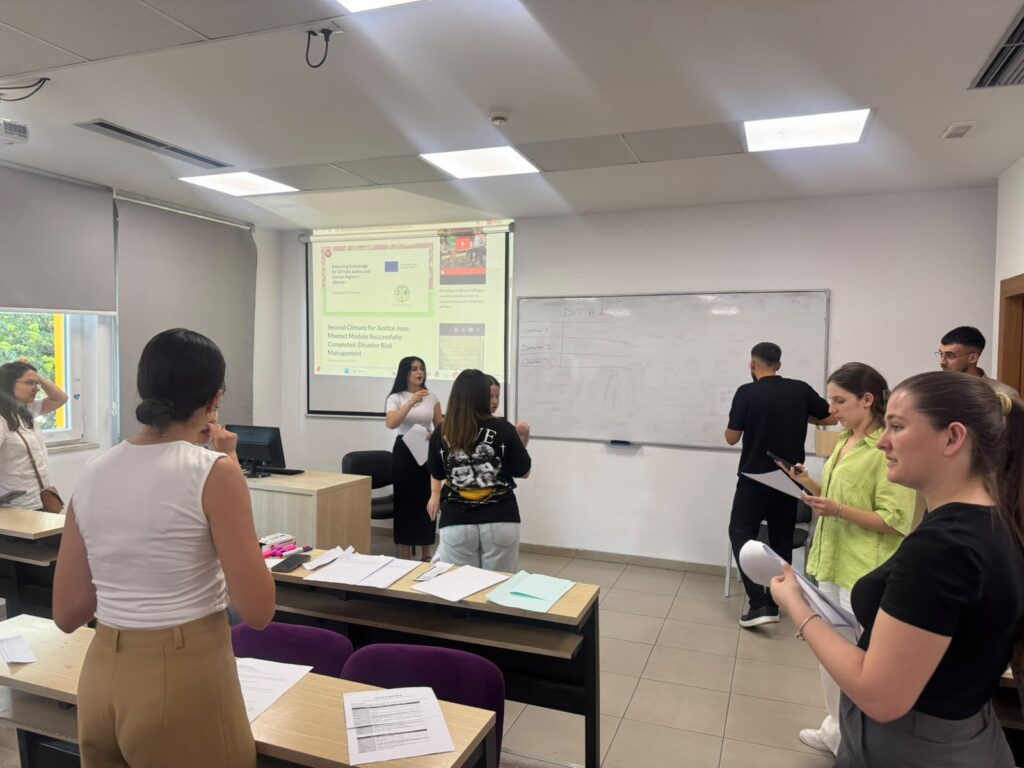


As the final activity of the Disaster Risk Management Module under the Climate for Justice Jean Monnet Module, students from the Master of Science in Risk Management participated in an interactive Disaster Preparedness Simulation Game designed to bridge theory and practice. The exercise followed the World Health Organization (WHO) simulation exercise methodology, providing participants with a structured and realistic emergency management experience focused on preparedness, coordination, response, and decision-making.
Working in multidisciplinary teams, students responded to a dynamic flood emergency scenario, assuming the roles of members of a Disaster Risk Management Committee. Throughout the simulation, they analyzed evolving information, coordinated emergency operations, prioritized resource allocation, developed public communication strategies, organized evacuations and shelters, and conducted rapid impact assessments, closely reflecting real-world disaster response processes.
The simulation emphasized teamwork, leadership, communication, and evidence-based decision-making while reinforcing key concepts of disaster preparedness and resilience. Through scenario-based learning and a facilitated debriefing, students critically reflected on their decisions, identified strengths and areas for improvement, and translated lessons learned into recommendations for enhanced emergency preparedness.
By integrating internationally recognized WHO methodologies into the curriculum, the Climate for Justice Jean Monnet Module continues to equip future risk management professionals with the practical competencies required to address complex disaster challenges and contribute to more resilient communities.