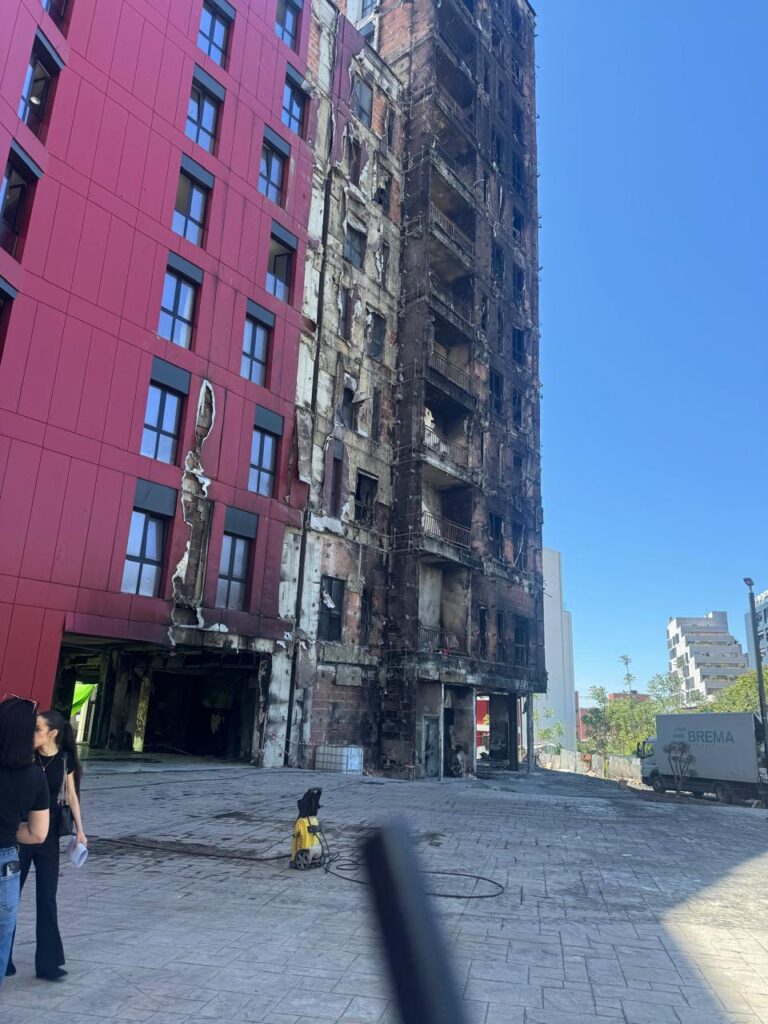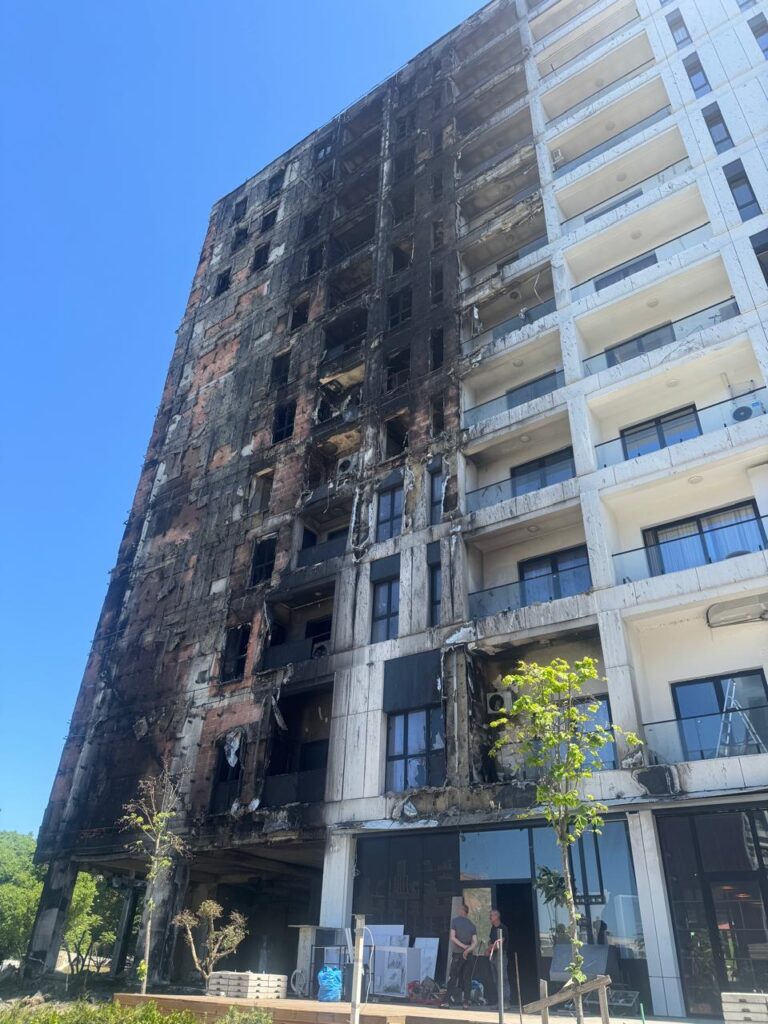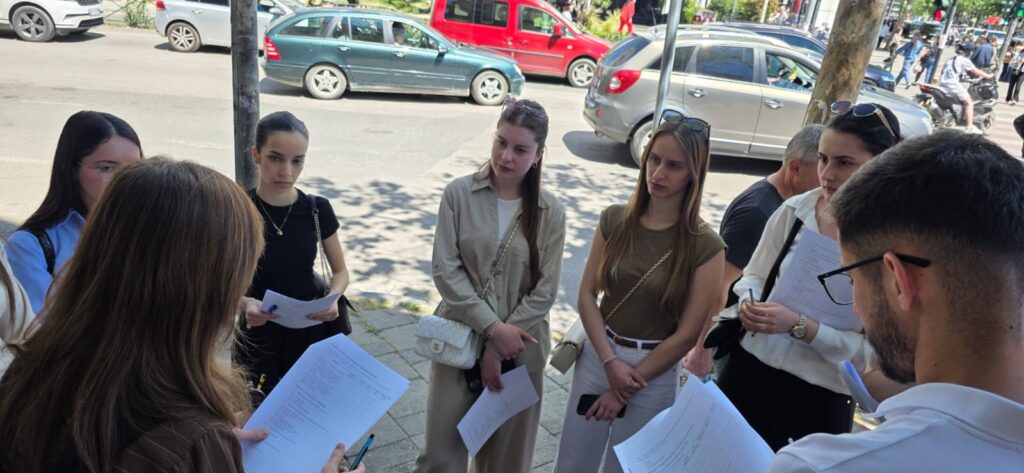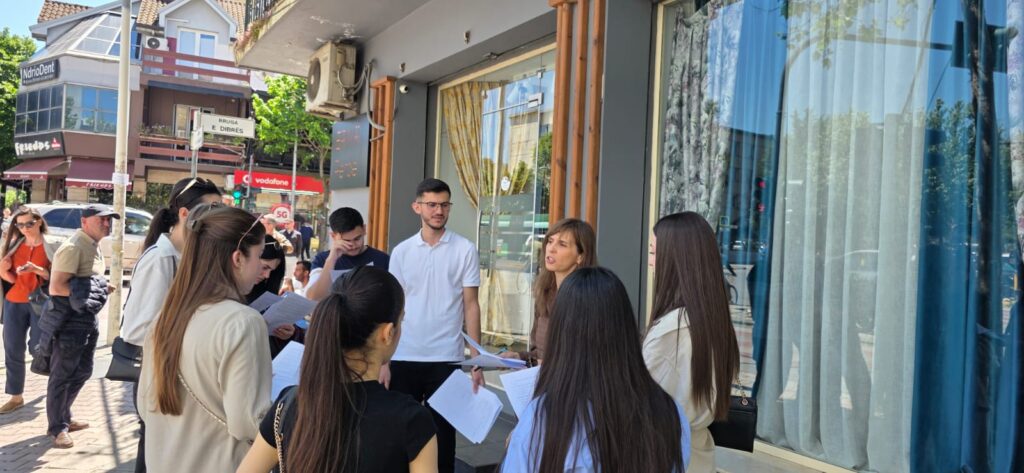


As part of the Climate for Justice Jean Monnet Module, students from Faculty of Economics, participated in a field visit to two of Tirana’s most significant recent disaster sites: the 12-storey residential building affected by the major fire and the 5 Maji market area, where a devastating fire destroyed more than 50 warehouses. The field visit provided students with a unique opportunity to observe the impacts of urban disasters firsthand and to examine how emergency response, recovery, and risk reduction measures are implemented in practice.
During the visit, students analyzed the consequences of these events on communities, businesses, and critical infrastructure while discussing the challenges faced by emergency responders, local authorities, and affected residents. Particular attention was given to disaster preparedness, business continuity, urban resilience, and the economic and social impacts of disasters, including their potential to trigger displacement and migration. The activity encouraged students to critically assess how disaster risk management strategies can reduce vulnerability and strengthen community resilience in increasingly complex urban environments.
The field trip complemented the theoretical knowledge by allowing students to apply disaster risk management concepts to real case studies. The activity forms part of the Climate for Justice Jean Monnet Module, which promotes interdisciplinary education on the interconnections between climate change, disasters, migration, and sustainable development.
Through field visits, simulation exercises, open lectures, and other experiential learning activities, the module equips students with the practical knowledge and analytical skills needed to understand disaster risks and contribute to more resilient, inclusive, and climate-ready communities in line with European Union priorities.